
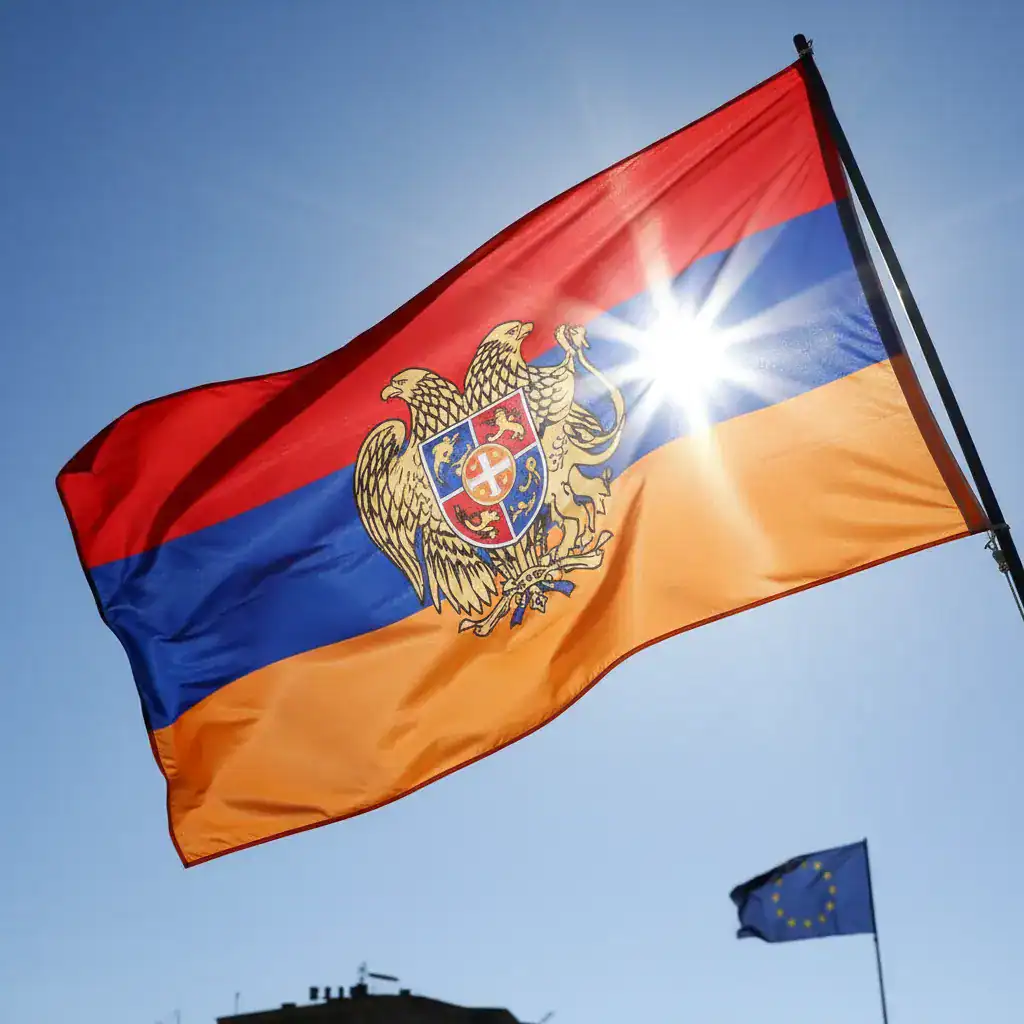
Yerevan, May 25 – Dmitry Peskov, the press secretary of the Russian President, stated yesterday that Armenia’s potential membership in the European Union would lead to a loss of favorable cooperation conditions with Russia. He emphasized that if Armenia were to join the EU, it would face changes in customs duties and increased prices for gas and energy carriers.
Russia’s Warning on EU Accession
Peskov’s statement highlights Russia’s clear stance on the matter, indicating that closer ties with the EU would inevitably affect Armenia’s economic relationship with Moscow. The remarks were made in response to a question regarding which organizations or associations Armenia could join that would signify a loss of favorable cooperation conditions with Russia. Peskov explicitly named the European Union.
This warning comes amidst ongoing discussions and speculations about Armenia’s geopolitical alignment. For years, Armenia has maintained a close relationship with Russia, particularly within the framework of the Eurasian Economic Union (EAEU) and the Collective Security Treaty Organization (CSTO).
Economic Implications for Armenia
The potential economic repercussions for Armenia are significant. As a member of the EAEU, Armenia currently benefits from preferential customs duties and favorable pricing for Russian gas and energy resources. These benefits are crucial for Armenia’s economy, which relies heavily on trade and energy imports from Russia.
Should Armenia proceed with EU membership, these economic advantages would likely be rescinded. The country would then be subject to EU tariffs and market-based prices for energy, which could lead to a substantial increase in costs for Armenian consumers and businesses. This shift could have a profound impact on various sectors of the Armenian economy, from manufacturing to household expenses.
Views from Russian Officials
Other Russian officials have echoed Peskov’s sentiments. Russian Deputy Prime Minister Alexey Overchuk previously stated that if Armenia decides to join the EU, customs duties, gas, and energy prices would change for them. He also noted that Russia’s partner is the people of Armenia, not any particular Armenian official, a sentiment also expressed by Dmitry Medvedev.
Medvedev further suggested that Armenian Prime Minister Nikol Pashinyan has taken a path of severing relations with Russia. Maria Zakharova, the official representative of the Russian Foreign Ministry, also commented that it would not be a tragedy for the EAEU if Pashinyan did not participate in the union’s leaders’ meeting.
Armenia’s Geopolitical Dilemma
The statements from Russian officials underscore the complex geopolitical dilemma facing Armenia. The country is caught between its traditional alliance with Russia and the growing desire for closer integration with European structures. This choice is not merely political but also has deep economic and social implications.
The Armenian government has been exploring various avenues for international cooperation, including strengthening ties with Western countries. However, any move towards the EU would necessitate a careful balancing act to avoid alienating Russia, a key security guarantor and economic partner.
The Path Forward
The decision to pursue EU membership would require a comprehensive assessment of the costs and benefits for Armenia. While greater integration with Europe could open up new markets and opportunities, it would also entail significant adjustments to its economic and political landscape, coupled with potential friction with Russia.
The ongoing dialogue between Yerevan and Moscow, as well as with Brussels, will be crucial in determining Armenia’s future trajectory. The coming months are expected to bring more clarity on this complex issue as Armenia navigates its foreign policy choices.